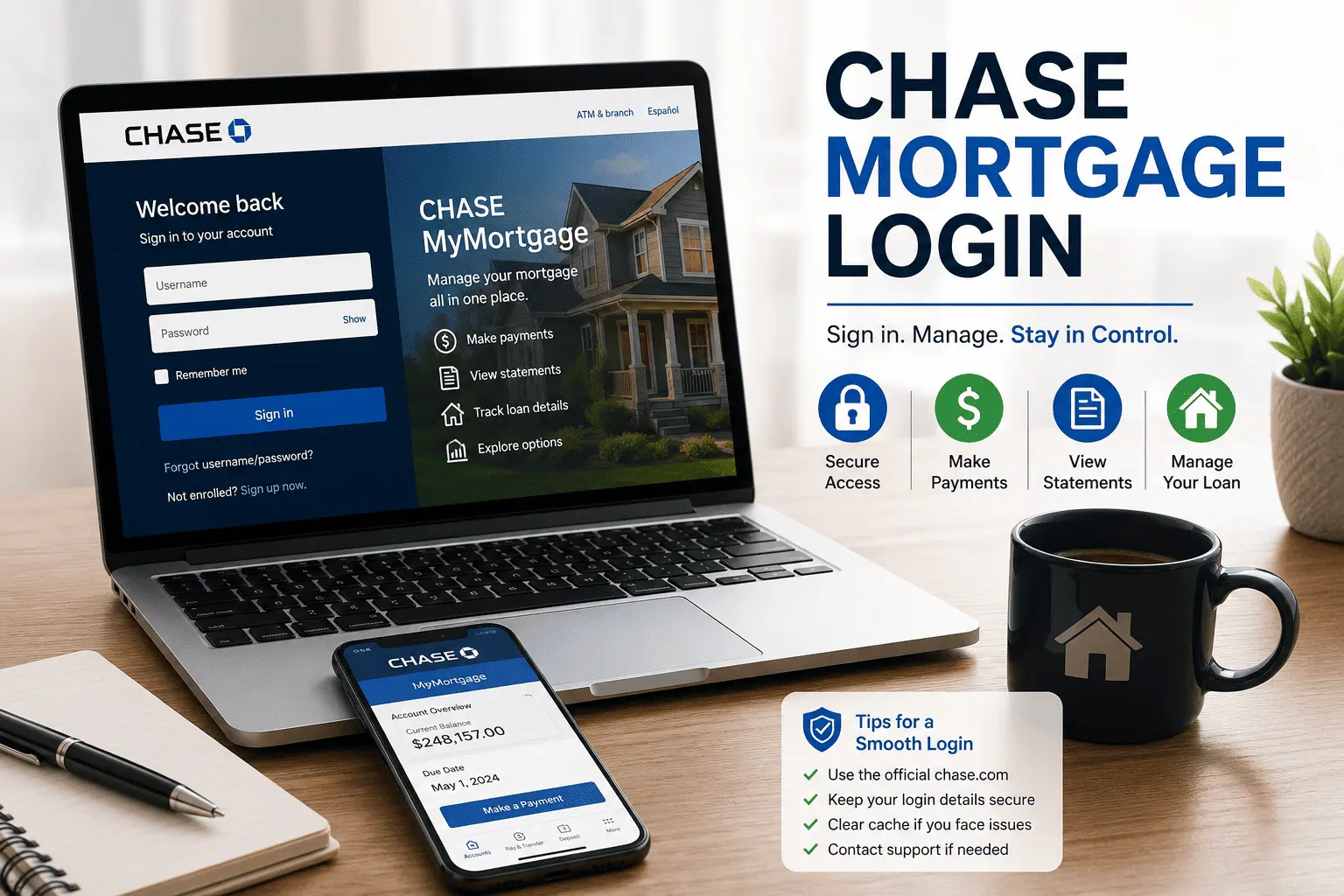
You sat down to check your home loan balance, typed in your Chase mortgage login details, and the page just would not load right. Maybe your password stopped working for no clear reason. Maybe you are not even sure if you should use chase.com or a separate mortgage site. That mix-up happens to new homeowners and long-time borrowers alike, and it is more common than most people think.
This guide walks you through the full sign-in process, from your first enrollment to fixing common errors. You will learn how to log in on desktop and mobile, what to do if your loan was just transferred to Chase, and how to make the most of your account once you are inside. By the end, you will know exactly where to click and what to expect at every step.
What Is Chase Mortgage Login?
Signing in to your Chase mortgage account is simply the process of viewing and managing your home loan online. It uses the same username and password as your regular chase.com account. You do not need a separate login just because you have a mortgage.
Once you sign in, Chase places your loan inside two connected tools. Chase MyMortgage shows your balance, payment history, and statements. Chase MyHome is a broader dashboard that adds home value estimates, refinance options, and market trends for your area.
Both tools sit behind the same sign-in page. So when people land here, they usually end up on one of these two dashboards depending on what task they want to finish. Knowing this ahead of time saves you from clicking around in confusion.
Most first-time users assume they need a special mortgage-only account. That is not true, and it is one of the biggest points of confusion we see. Your regular Chase profile, once linked, covers everything from checking accounts to your home loan.
This guide focuses on standard Chase home loans. If you have a reverse mortgage instead, the login steps and account tools work a bit differently, closer to what we cover in our PHH Reverse Mortgage Login guide.
It helps to bookmark your sign-in page once you know which dashboard you need. This saves you from searching for the right link every time you want to check your account.
How to Log In to Chase Mortgage on Desktop
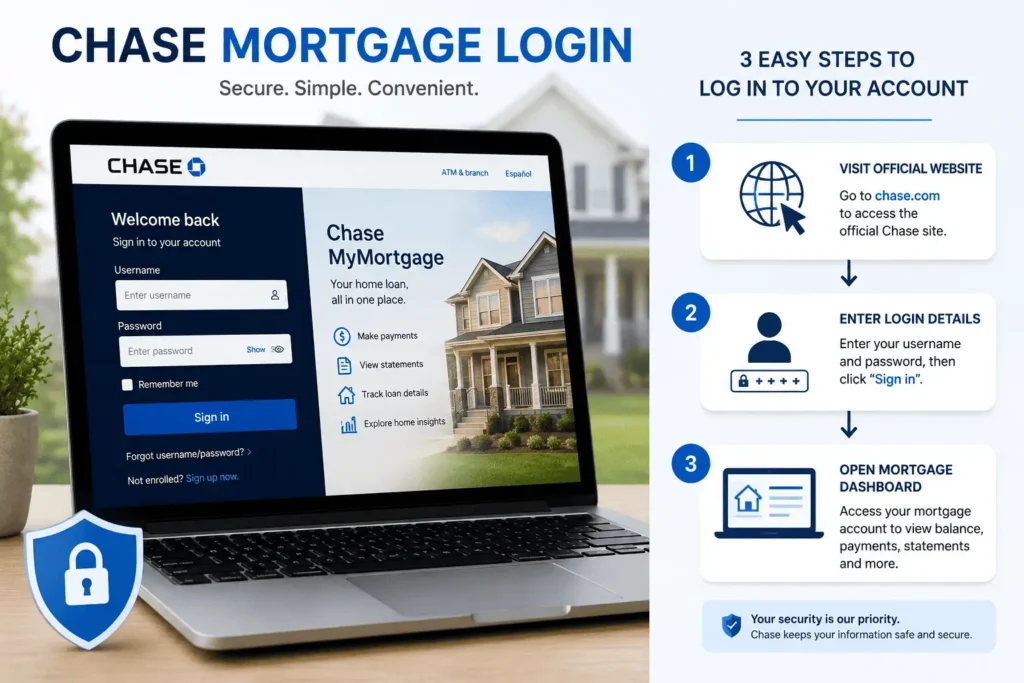
Signing in from a computer takes less than a minute once you know the steps. Chase built this page to work the same way across browsers, so it does not matter if you use Chrome, Safari, or Edge. The layout stays simple on purpose, since most people just want to check a balance or make a payment quickly.
Follow these steps to sign in:
- Go to the official Chase website at chase.com.
- Click the “Sign In” button in the top right corner.
- Enter your username and password.
- Complete a security check if the system asks for one.
- Click “Sign In” again to reach your account dashboard.
Once you are inside, look for your mortgage account under your list of products. Click on it to open your loan details, statements, and payment options. If you have more than one Chase product, like a checking account or credit card, they will all show up on the same dashboard.
If the page looks frozen or the sign-in button does nothing, clear your browser cache first. Old cookies can sometimes block the page from loading properly. Switching to a different browser also fixes this issue for most people in seconds.
How to Log In to Chase Mortgage on the Mobile App
The Chase Mobile app gives you the same account access as the desktop site, just in a smaller format. Most borrowers actually prefer the app because it is faster for quick balance checks.
To sign in on your phone:
- Download the Chase Mobile app from the App Store or Google Play.
- Open the app and tap “Sign In.”
- Enter your username and password.
- Tap your mortgage account from the account list.
The app updates your balance and payment status in real time, so what you see matches your desktop account exactly. Many borrowers keep the app on their home screen just for quick balance checks between full statements.
The mobile app also lets you deposit checks, review recent transactions, and set up account alerts without opening a browser. This makes it a solid choice if you manage your mortgage mostly from your phone.
Signing In with Face ID or Fingerprint
Most phones support biometric login through the Chase app. This means you can skip typing your password every time you open the app.
To turn it on, go to your app settings after signing in with your username and password. Look for “Login Settings” or “Security,” then enable Face ID or fingerprint sign-in. The next time you open the app, you can unlock your mortgage account with just a glance or a touch.
How to Enroll in Chase Mortgage Login for the First Time
If you just closed on your home loan, you may not have online access set up yet. Enrolling is simple, but you do need two pieces of information ready before you start.
You will need your mortgage account number and your Social Security number. Your account number is printed on your closing documents or your first mortgage statement.
Here is how to enroll:
- Go to chase.com and click “Sign In.”
- Select “Not enrolled? Sign up now.”
- Enter your account number and Social Security number to verify your identity.
- Create a username and password for your new profile.
- Set up your security questions and alert preferences.
Once enrollment is done, you can sign in right away using your new chase mortgage login credentials. If you already have another Chase account, like a checking account, your mortgage will simply be added to that same profile instead of creating a new one.
After you finish enrolling, Chase usually sends a confirmation email to the address on file. Keep this email for your records, since it often includes helpful links for setting up alerts and paperless statements. If the email does not arrive within a day, check your spam folder before assuming something went wrong.
Logging In After Your Loan Is Transferred to Chase
Sometimes your mortgage gets sold or transferred to Chase from a different servicer. This can feel confusing, especially if you were not expecting it. The good news is that your loan terms, interest rate, and monthly payment amount stay exactly the same. Only the company handling your payments changes.
If your loan was recently transferred, check your welcome letter for a Chase loan number. This letter also lists your official transfer date, which is the day your account becomes active on chase.com. Before that date, keep making payments to your old servicer as usual. Many borrowers who search for mortgage services after a transfer are simply trying to understand what changed and what stayed the same, similar to what we explain in our PHH Mortgage Services guide.
If you already had chase.com access before the transfer, your mortgage account will automatically appear on your dashboard once the transfer date arrives. If you are new to Chase, you will need to enroll using your new Chase loan number instead of a regular account number. Questions about a loan transfer can also be sent to james@allthings-mortgage.com, and our team will point you toward the right resource.
If you are not fully sure your loan has already moved, check your most recent mortgage statement first. It will list the current servicer’s name at the top. Loans move between companies fairly often in the mortgage industry, so if your account is still showing under a different company, guides like PHH Mortgage Center Login or Flat Branch Mortgage Login may be more useful until your transfer date arrives.
What You Can Do After Logging In to Chase Mortgage
Your dashboard is not just for checking your balance. Chase built several tools into the same login so you can manage most tasks without calling support. Below are the actions borrowers use most once they are signed in.
Make a Mortgage Payment
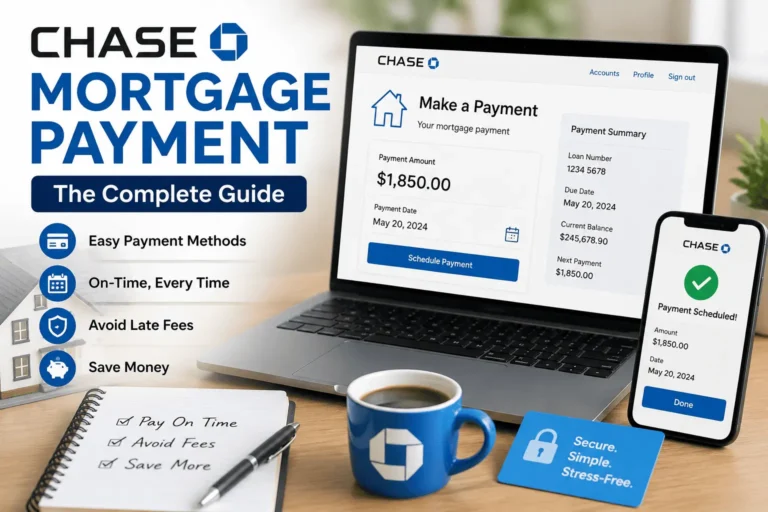
You can pay your mortgage directly from your dashboard. Choose “Pay & transfer,” then select “Pay bills” and pick your mortgage account. From there, you can pay from a linked bank account and choose the payment date.
You will need to register your external bank account specifically for mortgage payments, even if that account is already linked to another Chase product. This is a one-time setup step. Once it is done, future payments only take a few clicks. Borrowers comparing servicers sometimes also check guides like Flat Branch Mortgage Payment or CMG Mortgage Login to see how other lenders handle the same process.
Set Up Automatic Payments
If you want to stop worrying about due dates, automatic payments are worth setting up. You can choose monthly, twice-a-month, or every-two-week payment schedules. Once it is active, your payment pulls from your linked account without you doing anything each month.
Splitting payments every two weeks can also help you pay off your loan a bit faster over time. This happens because you end up making one extra full payment each year without really noticing it. It is a small change that adds up over the life of a thirty-year loan.
View Your Escrow Account
Your escrow account covers property taxes and homeowners insurance. After signing in, you can see your current escrow balance and when your next analysis is scheduled. This helps you understand why your monthly payment may shift slightly from year to year.
Chase reviews your escrow account once a year to check if you are paying enough to cover taxes and insurance. If your local tax rate goes up, your monthly payment may increase slightly to match. Seeing this breakdown ahead of time helps you avoid surprises on your next statement.
Download Statements and Tax Forms (1098/1099)
Your mortgage statements and tax documents live in the same dashboard. You can download your Form 1098, which shows the mortgage interest you paid that year. This document is often needed when filing your taxes, so it helps to know exactly where to find it, much like the process we cover in our CMG Mortgage Tax Documents guide.
Forms are usually ready by late January each year. If your document is missing, check that your mailing and email preferences are up to date under your profile settings first.
Request a Mortgage Payoff Quote
If you plan to sell your home or refinance, you will need a payoff quote. This shows the exact amount needed to close out your loan on a specific date. You can request this quote directly from your account instead of calling in.
Payoff amounts change daily because of interest, so always request a fresh quote close to your actual closing date. An old quote can be off by a noticeable amount if too much time passes between the request and the payment.
Manage Paperless Statements and Alerts
You can switch to paperless statements to cut down on mail and clutter. While you are there, turn on alerts for payment due dates, unusual account activity, and escrow changes. These small settings can save you from missed payments later.
Common Chase Mortgage Login Problems and How to Fix Them
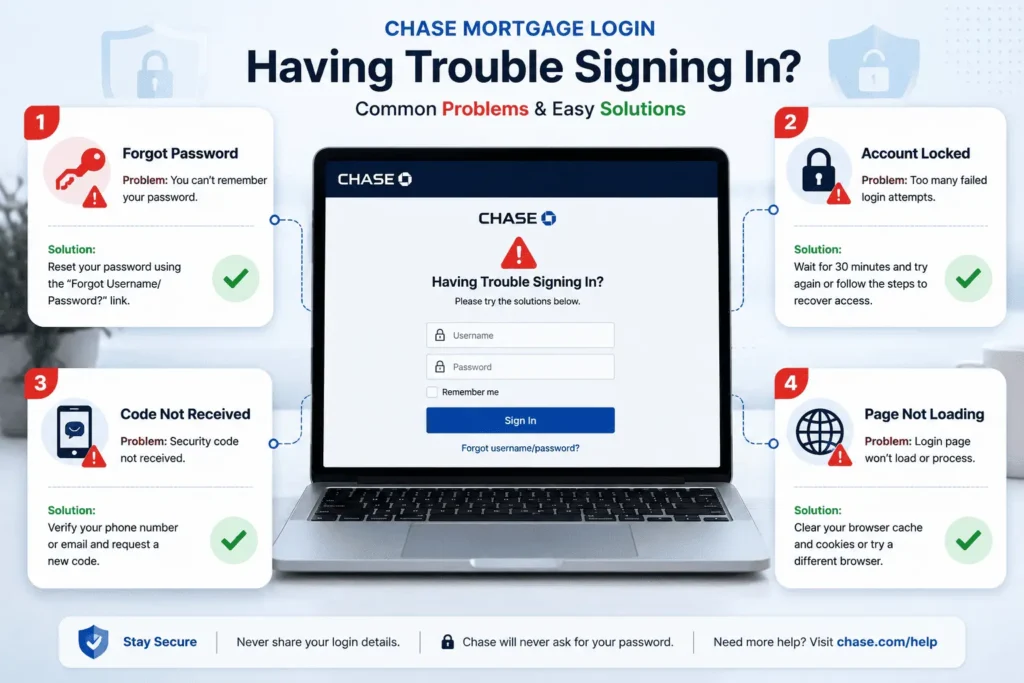
Even a well-built system runs into hiccups sometimes. Most sign-in issues fall into one of three categories, and each one has a quick fix.
| Problem | Quick Fix |
|---|---|
| Forgot username or password | Use the “Forgot username/password?” link on the sign-in page |
| Account locked | Wait a few minutes, then reset your password |
| Two-factor code not arriving | Check your spam folder or request a new code |
Here is a closer look at each one, along with the exact steps to fix it.
Forgot Username or Password
This is the most common issue borrowers run into. Click “Forgot username/password?” on the sign-in page, then answer a few identity questions. Chase will walk you through resetting your credentials right there on the screen.
Account Locked
Too many failed login attempts will lock your account for a short time. This is a safety feature, not a sign that something is wrong. Wait a few minutes, then try the password reset option instead of guessing again. Repeated guessing usually extends the lockout, so it is better to reset than to keep trying.
Two-Factor Authentication Not Working
Sometimes the verification code does not show up right away. Double check that your phone number or email on file is correct and current. If the code still does not arrive, request a new one instead of waiting indefinitely, and check your spam folder just in case.
A weak signal or airplane mode can also delay text codes on your phone. Switching to the email option for your code is a quick workaround if texts are not coming through.
How to Contact Chase for Mortgage Login Support
If none of the fixes above work, it is time to reach a real person. Chase runs a dedicated home lending support line for mortgage account issues at 1-877-293-7071. Support is available Monday through Friday from 8 AM to 9 PM ET, and Saturday from 10 AM to 6 PM ET.
Have your loan number ready before you call. This helps the support team pull up your account faster instead of asking you multiple identity questions. If you are comparing how other servicers handle phone support, our CMG Mortgage Phone Number guide breaks down a similar process.
Calling early in the morning usually means shorter wait times. Mondays tend to be the busiest day for mortgage support lines across most banks, so a midweek call can save you time.
You can also send a secure message once you are signed in, which usually gets a response within one business day. Avoid including your account number or Social Security number in any email you send, since that information should only go through secure, verified channels. For general questions about mortgage servicing across different lenders, you can also reach out to james@allthings-mortgage.com.
Is Chase Mortgage Login Secure?
Chase uses several layers of protection to keep your mortgage account safe. Every session is encrypted, which means your data cannot be read if someone intercepts it. This is standard practice across major banks, not something unique to mortgages.
Security questions on this topic come up a lot, especially from first-time homebuyers who are new to managing a loan online. It helps to know exactly what protections are already built in before you start worrying about the wrong things.
Two-factor authentication adds another layer by requiring a one-time code alongside your password. Chase also runs automated fraud monitoring in the background, which flags unusual login attempts or transactions. If something looks off, your account may be temporarily restricted until you confirm it is really you.
On your end, a few habits go a long way. Use a strong, unique password, avoid signing in on public Wi-Fi, and log out fully when you are done, especially on shared devices.
Watch out for fake emails asking you to sign in through a link. Chase will never ask for your full password through email or text. If a message feels off, type chase.com directly into your browser instead of clicking any link.
Conclusion
Getting your chase mortgage login working should not eat up your afternoon. Once you know where to click, enrolling, signing in, and fixing errors only takes a few minutes. The steps above cover the same process whether you are brand new to Chase or your loan just moved over from another servicer. Keep this guide handy the next time your account gives you trouble.
Frequently Asked Questions
These are the questions borrowers ask most often about signing in and managing their account.
Is Chase mortgage login the same as my regular chase.com login?
Yes. Chase uses one login for all your products. If you already bank with Chase, your mortgage will simply appear under the same account once it is linked.
What if I do not have my mortgage account number?
You can find it on your closing documents or your first mortgage statement. If you still cannot locate it, call Chase home lending support for help.
Can I access my Chase mortgage from the mobile app?
Yes. The Chase Mobile app gives you full access to your mortgage account, including payments, statements, and payoff quotes.
What happens if my loan was just transferred to Chase?
Your rate and terms stay the same. You will get a welcome letter with a transfer date, after which your loan appears on chase.com.
Why does my account keep locking me out?
This usually happens after several failed login attempts. Wait a few minutes, then reset your password instead of retrying the same one.